
A winter road trip across Spain reveals green northern hills, dry Andalusian plains, flowing rivers in Catalonia—and the subtle landscapes behind the Mediterranean diet.
Spain in December reveals itself slowly, in muted light and subtle textures. One drive can carry you from the mossy, rain-soaked hills of the Bay of Biscay, through the pale plains and olive groves of Andalusia, and onward to Catalonia’s measured rivers. Winter strips away spectacle and heat, leaving the land’s baseline truth—its soil, its water, its quiet resilience.
Winter Road Trip Spain: Quiet Observation Across the North
The journey begins in the north. Roads are empty, streets are quiet, and winter light softens the landscape. Driving is not the most eco-friendly choice, yet it allows moments of reflection: to notice the patterns of rivers, the persistence of vegetation, and the ways humans manage water scarcity.
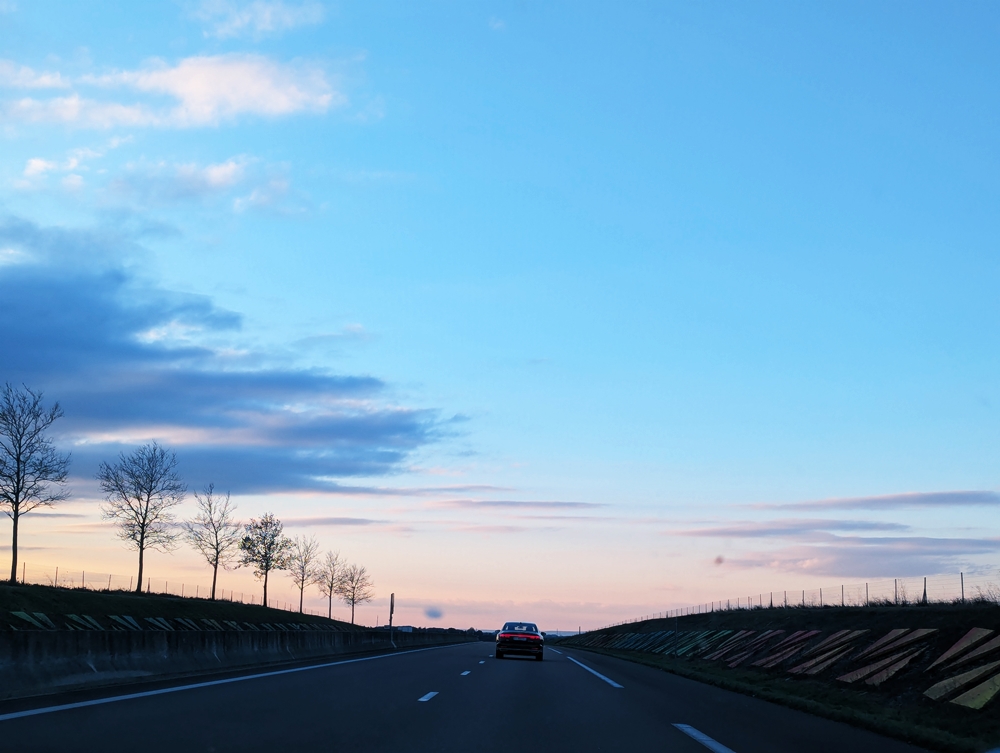
Even in December, the land tells a story of climate, resilience, and human adaptation. Without heat or tourists, subtle differences in soil, moisture, and vegetation emerge clearly.
Northern Spain and Dune du Pilat: Mossy Hills and Atlantic Sand
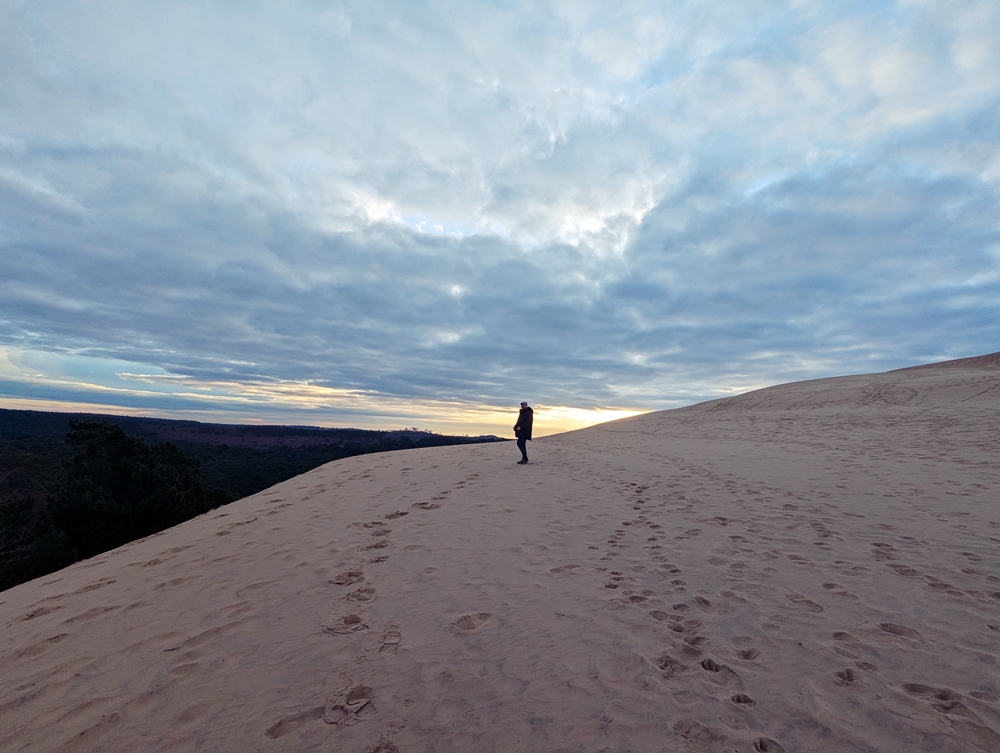
Before Spain turns green, the journey pauses in France, at the edge of the Atlantic. The Dune du Pilat, Europe’s largest sand dune, rises sharply from the forest and the sea—a vast, shifting body of sand shaped entirely by wind and water. Climbing it in winter, the scale becomes unmistakable: dunes advancing inland, pine forests holding their ground, the ocean breathing steadily below. It is a landscape in motion, where nothing is fixed and stability is negotiated grain by grain.
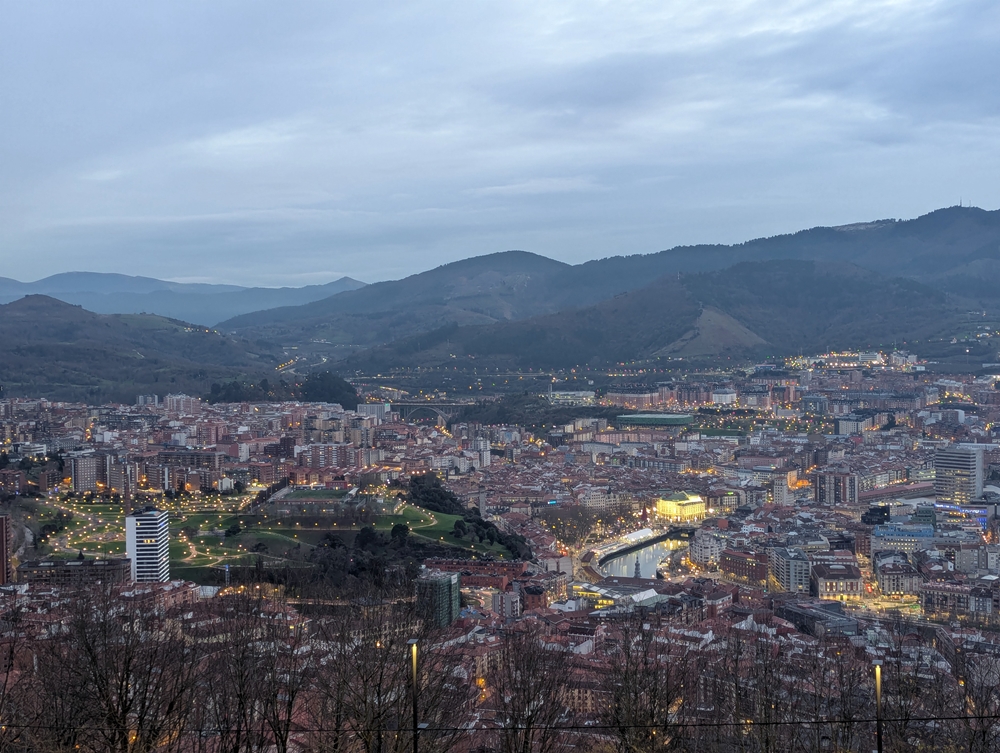
Crossing the border into Spain, the contrast is immediate. Around Bilbao, the Atlantic north settles into continuity. Hills are mossed, rivers run full, and pastures glow in deep green. Clouds hover low, drizzle softens the roads, and wooded ridges breathe under winter mist. Where the dune speaks of movement and exposure, northern Spain answers with saturation and persistence. Here, winter does not strip life away—it sustains it.
Together, these landscapes form a quiet lesson. Sand and moss, dune and forest, motion and hold. Both are Atlantic, both shaped by water, yet each reveals a different way land responds to the same elemental forces.
Burgos to Madrid: High Plateaus and Dry Interior Landscapes
Leaving the green Atlantic north behind, the road passes through Burgos and the Meseta Central toward Madrid. Forests thin into scrubland and open fields. Streams that flowed steadily in the north shrink or disappear in shallow beds. Winter light casts muted shadows on the high plateau, where soil and rock are exposed and vegetation is sparse.
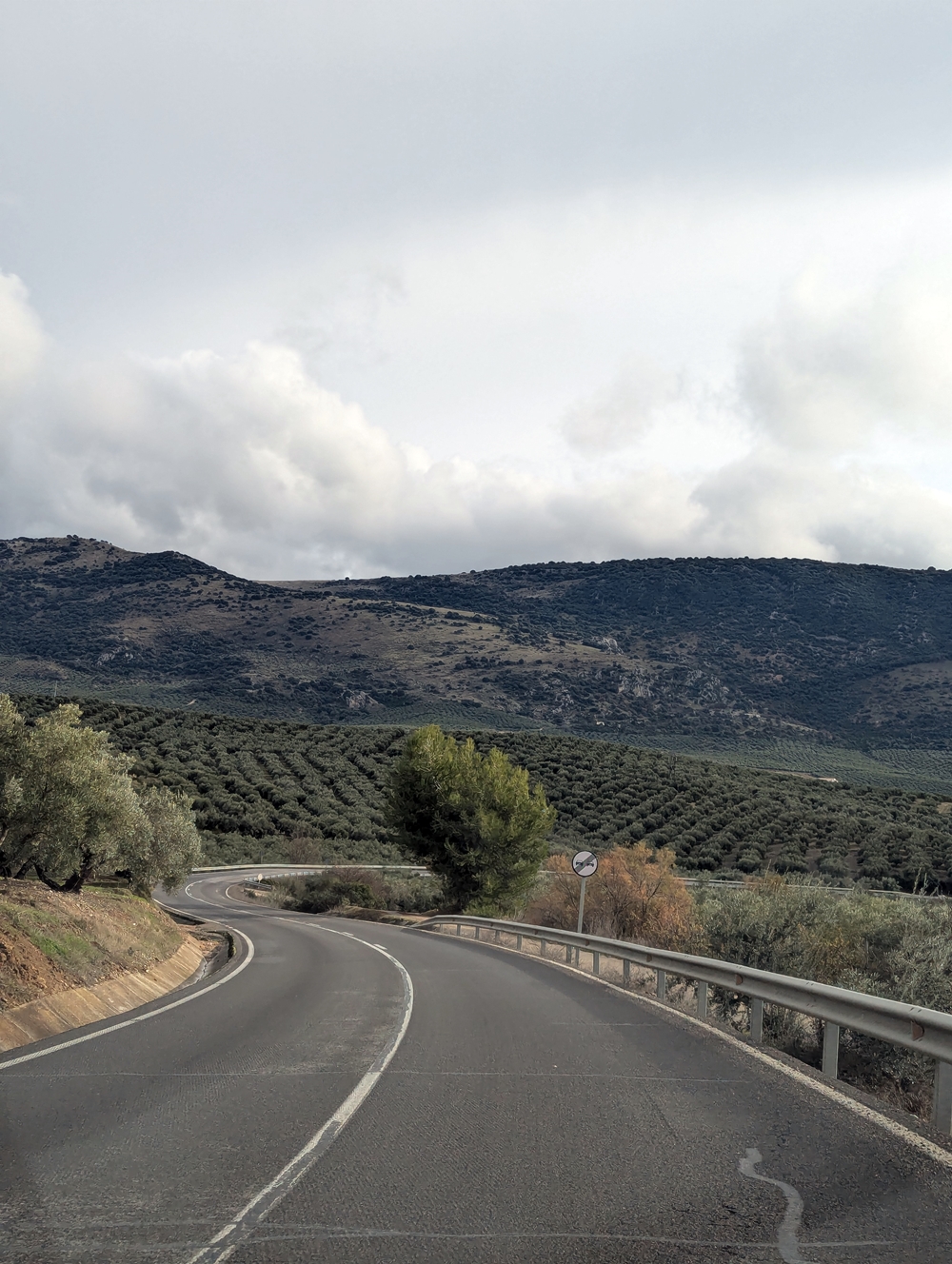
The change is subtle but telling: the land begins to reveal its structural dryness—not yet the semi-arid south, but already a step toward Andalusia’s pale, sun-bleached plains. Here, climate gradients are visible in what is absent: narrow rivers, thin tree cover, and open soil between plants.
Andalusia Olive Groves, Córdoba, and Málaga by the Sea
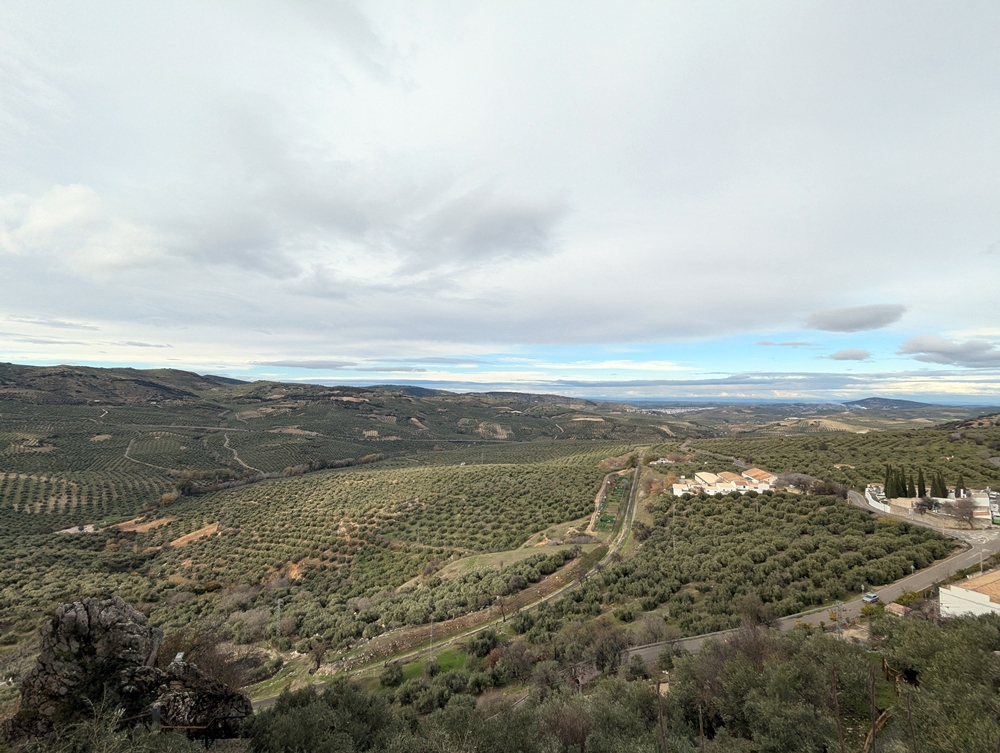
Andalusia in winter is pale, calm, and quietly revealing. Hillsides around Córdoba are dominated by grey-green olive groves, their disciplined rows amplifying the exposure of bare soil between trees. This is a working landscape shaped by scarcity, where winter cools the air but does little to soften the underlying dryness.
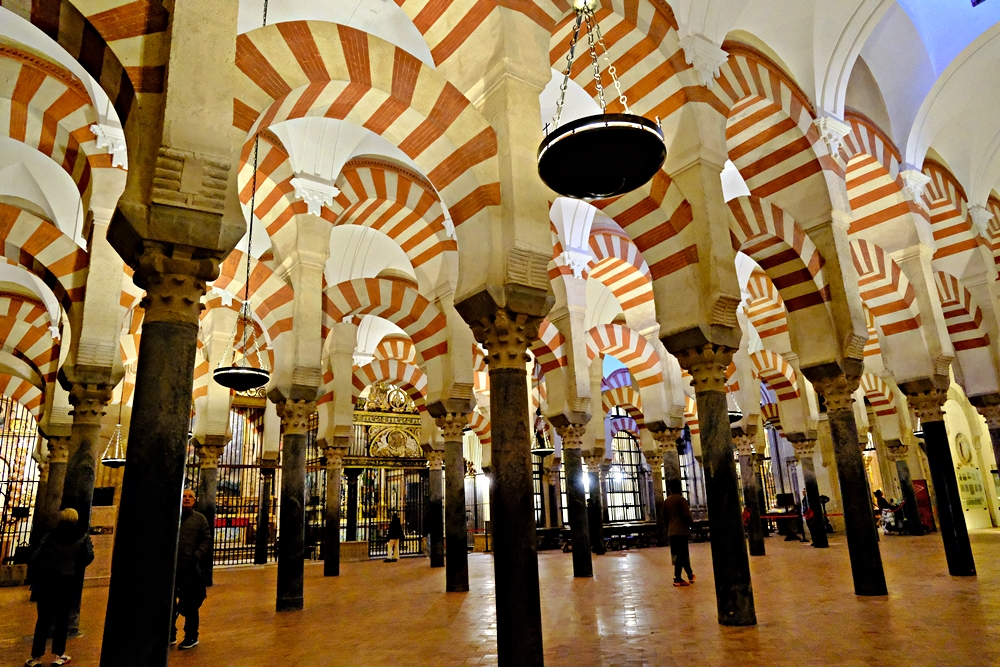
Within the city, the Mosque–Cathedral of Córdoba stands as a reminder that architecture, belief, and water management were once inseparable. Courtyards lush with orange trees and flowing fountains contrast sharply with surrounding streets, illustrating how access to water has long defined comfort, beauty, and power in southern Spain.
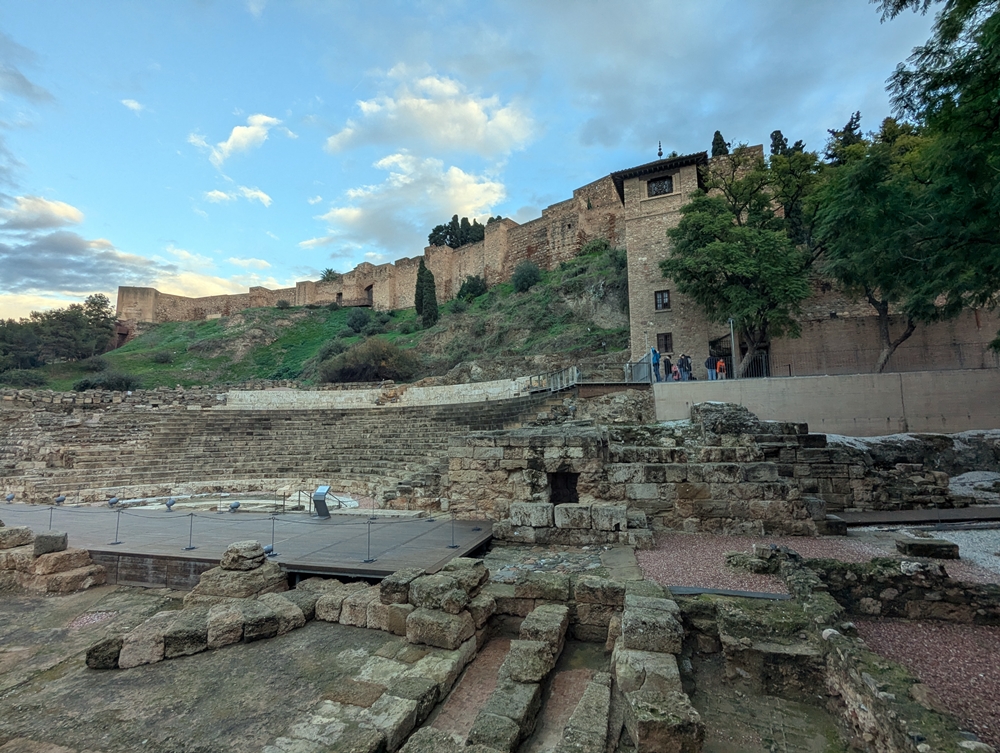
Further south, four winter days in Málaga shift the lesson without abandoning it. The city opens to the Mediterranean, framed by Moorish fortifications, Roman ruins, and a coastline built for light and warmth. Sunshine feels effortless here, even in December, yet its presence has shaped everything—from urban layout to agriculture, from shaded streets to palm-lined promenades. Málaga’s cultural identity, tied to figures like Pablo Picasso, reflects a long tradition of drawing inspiration from this meeting of land, sea, and light.
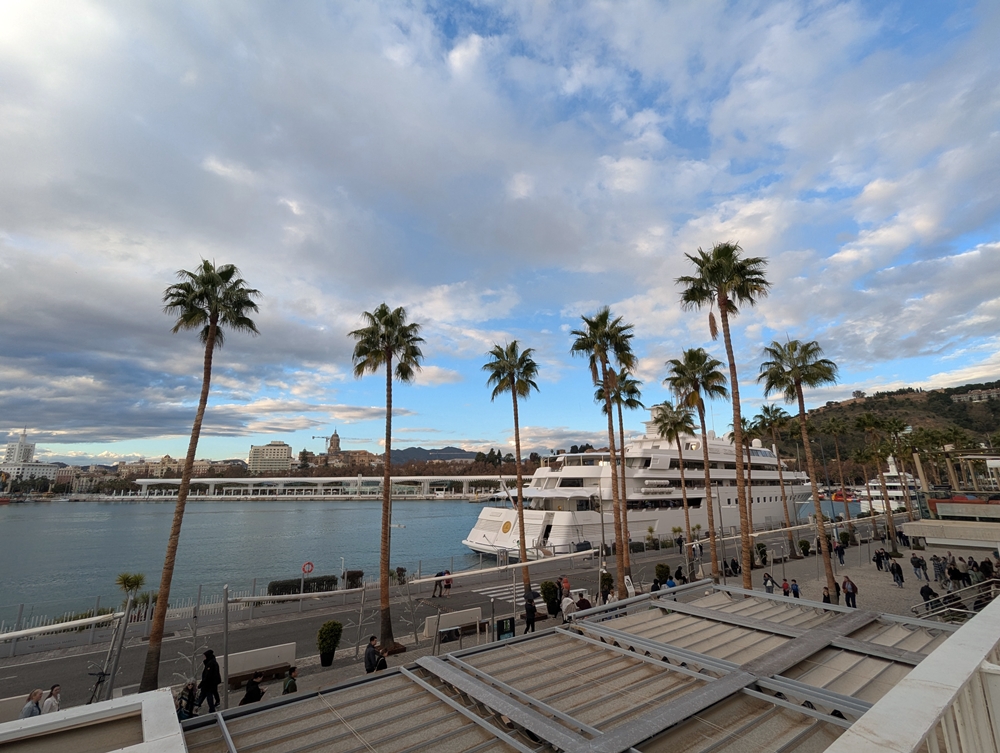
Modern Málaga tells a newer story as well. Cruise ships glide into the harbour, bringing global tourism to a coast already under environmental pressure. The contrast between ancient walls, contemporary art museums, and floating cities offshore raises quiet questions about sustainability, water use, and the cost of perpetual sunshine. Even in winter, the Mediterranean reveals itself as both a gift and a responsibility.
Greenhouse Seas Before the Tabernas Desert
After leaving Málaga behind, the road arcs south and east toward Almería, and something unexpected begins to dominate the view from the highway: a shimmering tapestry of white fields stretching toward the foothills. At first glance it’s hard to read — dusty plains, pale earth — but then the scale becomes clear. These are not barren fields but thousands of hectares of greenhouses, collectively known as el Mar de Plástico — the plastic sea.
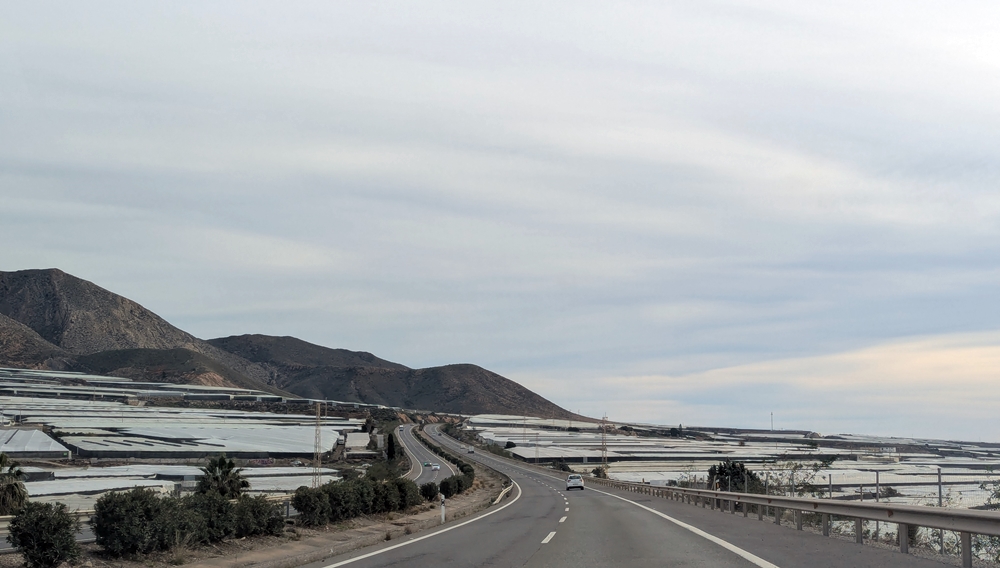
In this corner of southeastern Spain, aridity and sun have been coaxed into productivity. Where scrub and dry soil once prevailed, layers of polyethylene now capture heat and shelter crops through the mild winter months. What appears from the road as a lunar expanse of plastic is, in reality, one of the most intensive agricultural zones in Europe, producing tomatoes, peppers, cucumbers, and fruit destined for markets far beyond Spain’s borders, long after northern fields have gone dormant.
The landscape feels engineered rather than grown — geometry imposed on dryness, abundance created through enclosure. It is a place that does not hide its artificiality, standing as a threshold between cultivation and constraint.
Tabernas Desert: Europe’s Only True Desert
Beyond the greenhouses, the structures thin and then disappear. The road climbs inland, and the land gradually releases itself from intervention. The Tabernas Desert emerges quietly: pale slopes, exposed rock, and sparse vegetation spread across a wide, open basin.
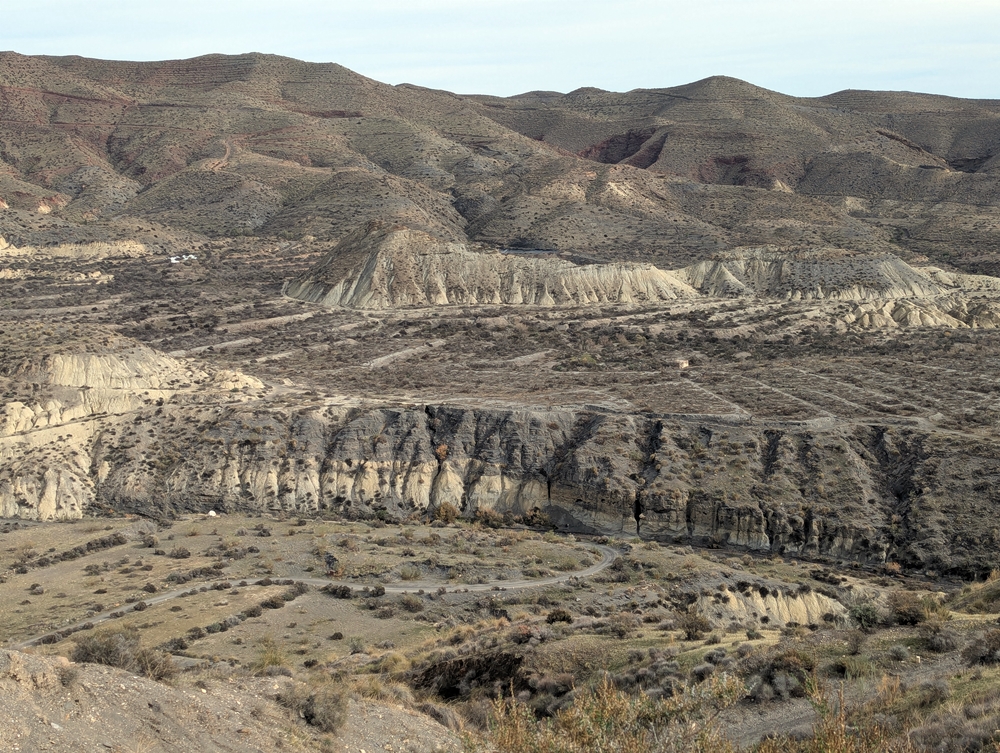
Recognised as Europe’s only true desert, Tabernas is defined by long-term aridity. Rainfall is low and irregular, soils are fragile, and water appears only briefly after rare storms. Winter cools the air but does not change the character of the land.
A short stop at one of the former Sergio Leone Western film sets sits almost unnoticed within this landscape. The Old West-style buildings—wooden fronts, a bar, a shop—remain because the terrain needed little alteration to stand in for somewhere else. The desert already looked the part.
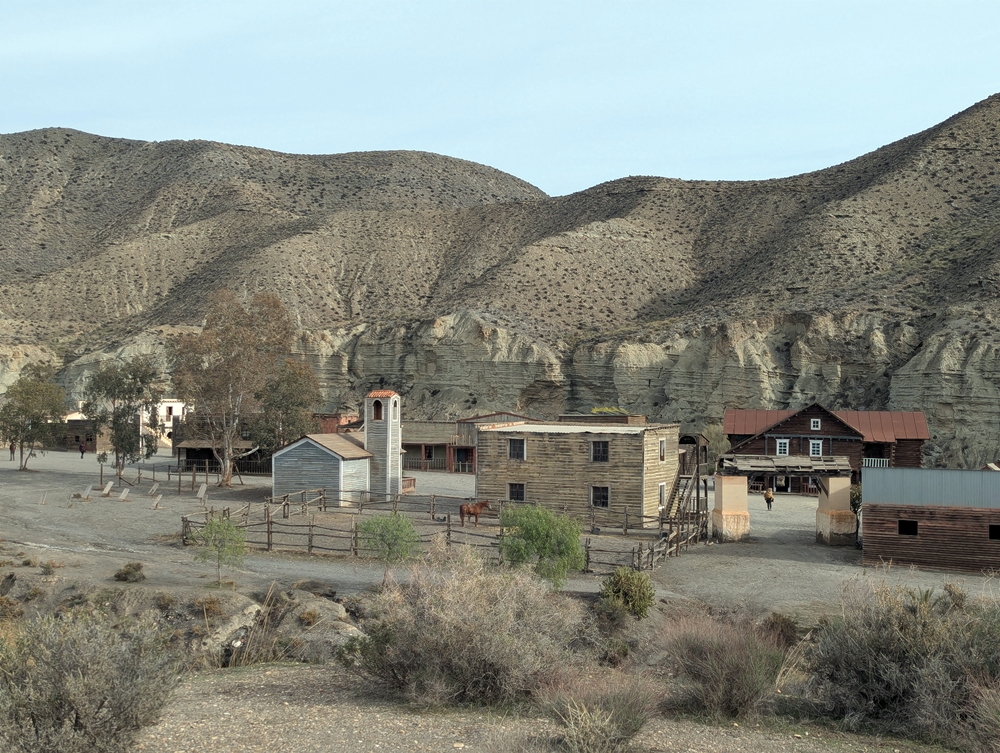
After the controlled productivity of the greenhouse corridor, Tabernas feels exposed and final. Here, there is no correction or cover—only land operating on its own terms.
Eastern Spain and Catalonia Rivers: Measured Flows and Wetlands
As the road turns northeast, the landscape shifts again. In Catalonia, rivers return—not in spectacle, but in presence. Around Girona, the Ter and the Onyar move steadily through winter fields, floodplains, and compact towns. Their flow is modest yet continuous, shaped by regulation, memory, and long familiarity rather than abundance.
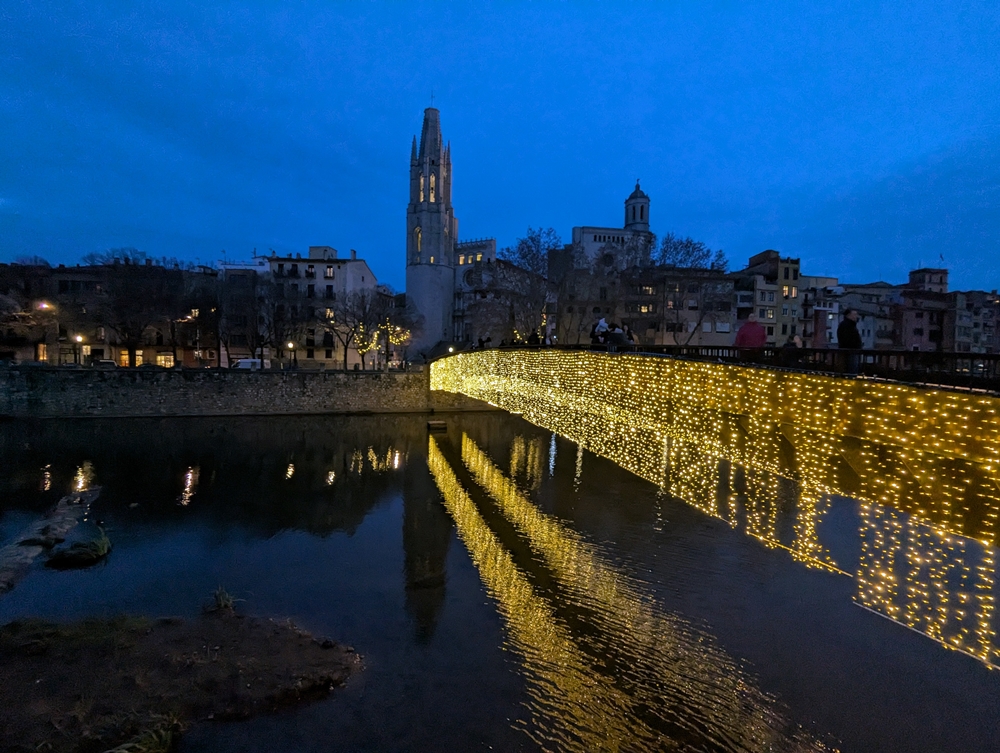
Here, land use feels negotiated. Irrigated fields sit beside wetlands; cities turn toward the water without overwhelming it. Winter light reveals a careful balance: enough flow to sustain life, not enough to forget its limits. This is a region where rivers are neither taken for granted nor hidden away, but quietly integrated into daily routines and urban form.
Catalonia does not promise security. It demonstrates attentiveness — a way of living that assumes fluctuation and plans accordingly, holding systems together through restraint rather than excess.
Portbou, Spain: Borders, Memory, and the Walter Benjamin Memorial
Just before France, the road narrows and arrives at Portbou, a town shaped by borders more than by growth. Here, mountains descend abruptly into the sea, rail lines press through rock, and space feels compressed — as if movement itself must negotiate passage.
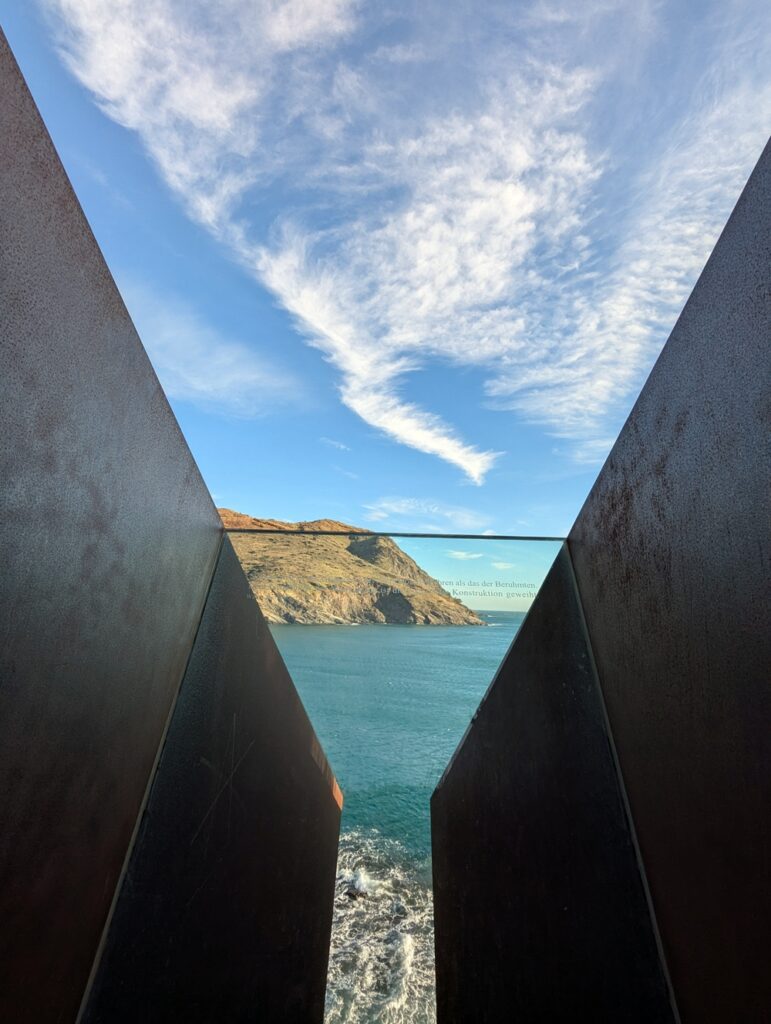
Above the harbour, the Walter Benjamin Memorial cuts into the hillside. A steel corridor descends toward the Mediterranean, step by step, ending in glass. There is no panorama, no release — only the sea held at a distance. The structure insists on slowness, mirroring the final journey Benjamin made here in 1940, when geography and politics closed in together.
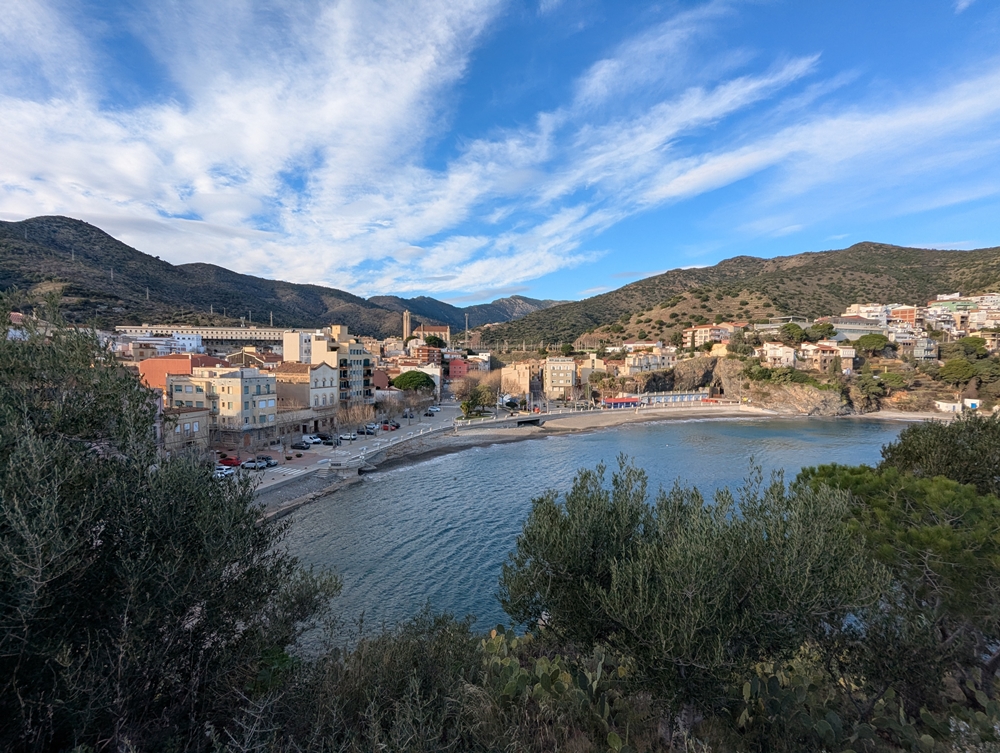
The landscape sharpens the meaning. Steep slopes, limited land, and a hard coastline remind the visitor that borders are not abstractions; they are shaped by terrain as much as by policy. After days of observing how systems manage resources and movement, Portbou shifts the focus inward. It speaks not of balance, but of constraint — and of what happens when safe passage disappears.
In winter quiet, with the wind moving freely where people once could not, Portbou holds its lesson without explanation. Some places teach through continuity. Others teach through endings.
Reflections on Winter Travel, Mediterranean Diet, and Environmental Lessons
Winter strips away tourists and heat, exposing structural truths. Dry riverbeds, sparse hills, and low reservoirs tell the story of water scarcity, soil vulnerability, and human adaptation. Driving may have a carbon cost, but it allows slow observation and deep learning.
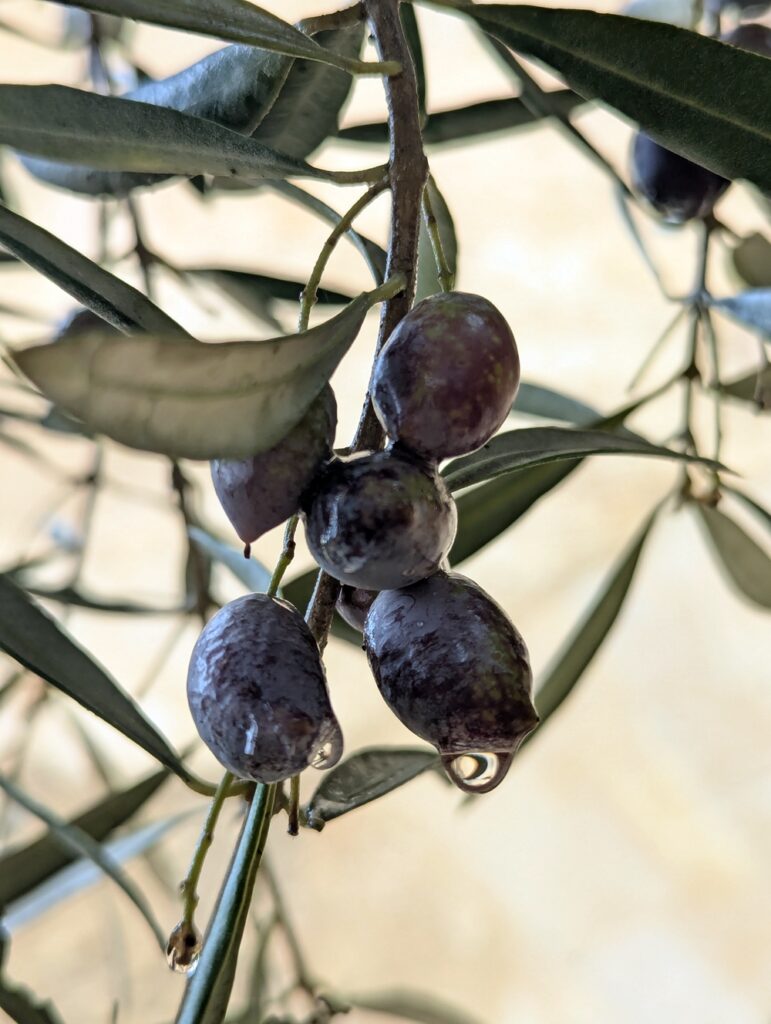
These landscapes are inseparable from human culture. The olive groves, cereals, and vineyards that dominate the interior and Andalusia shaped the Mediterranean diet, a cuisine born of necessity and climate. What we now celebrate as olives, legumes, and grains is the product of centuries of adaptation to limited water and seasonal extremes. Winter reveals the fragility behind abundance: irrigation, soil care, and crop selection are all human responses to a landscape that does not always give freely.
Spain in December: Quiet Contrasts Across the Country
Spain in December is a mosaic:
- North: Mossy hills, abundant rainfall, rivers in full flow.
- Interior & Andalusia: Dry plains, olive groves.
- East/Catalonia: Measured rivers, wetlands, integrated urban water systems.
Winter makes visible the hidden narratives of water, climate, and human ingenuity. Observing slowly, with care, transforms a road trip into a lesson in resilience, adaptation, and environmental awareness.
Leave a Reply